
Nigerian hospitality tech rarely announces its big moments. They show up quietly inside a hotel: a manager finally retiring a spreadsheet she’s used for six years, a serviced apartment operator putting three properties on one dashboard for the first time, a front desk team that stops dreading the night audit because the system does the heavy lifting. These small shifts start adding up around now, close enough to Q4 to feel the pressure, but early enough to do something about it.
Let’s look at where Nigerian hospitality tech genuinely stands, and what the properties entering Q4 better prepared than last year are doing differently.
Table of Contents
ToggleWhere Nigerian hospitality tech stands right now
The optimism has numbers behind it. Nigeria’s listed hospitality firms posted a combined profit after tax of ₦14.60 billion in the first half of 2026, up 24.8% on the year before. Hotels gained from a recovery in corporate travel while other sectors struggled with weaker demand. Occupancy is expected to hold around 70% for the year, and revenue per room is climbing even where occupancy has dipped slightly. Smarter pricing is doing that work, not just filling more rooms.
That matters more than it first seems. It shows hotels using Nigerian hospitality tech to get better at running the business they already have, instead of simply chasing more guests through the door.
What’s shaping decisions in the Nigerian market
A few trends define Nigerian hospitality tech this year: direct booking growth, operational automation, tighter revenue control, and guest expectations shaped by the short-let market. Guests now judge a stay by how little friction they feel, from how fast you reply to how clearly you handle payment, not just by décor and location. Operators who treat booking channels and guest communication as real commercial systems, not side tasks, are pulling ahead.
The global direction is even sharper. Industry leaders are being told that generative AI and connected cloud platforms will separate properties that thrive from those that quietly fall behind, and the window to build a real advantage may be only twelve to eighteen months. Nigerian hotels aren’t exempt from that clock, even if the pressure looks a little different here.
4 smart moves for Nigerian hospitality tech teams before Q4
- Test your systems before the rush, not during it. If your channel manager lags, your reports take too long, or your POS can’t talk to your PMS, fix it now while you can do it calmly.
- Make revenue control your edge. Cash, transfers and cards now flow through multiple outlets and channels. The operators pulling ahead can see occupancy, service and revenue leakage in one place. Adding more tools without connecting them doesn’t get you there.
- Invest in direct bookings. Guests compare properties more carefully than ever. A smoother, faster direct booking experience captures demand before an OTA ever enters the picture.
- Get your staff ready. No system delivers if the team hasn’t had time to get comfortable with it. Train now, before Q4 volume tests everything at once.
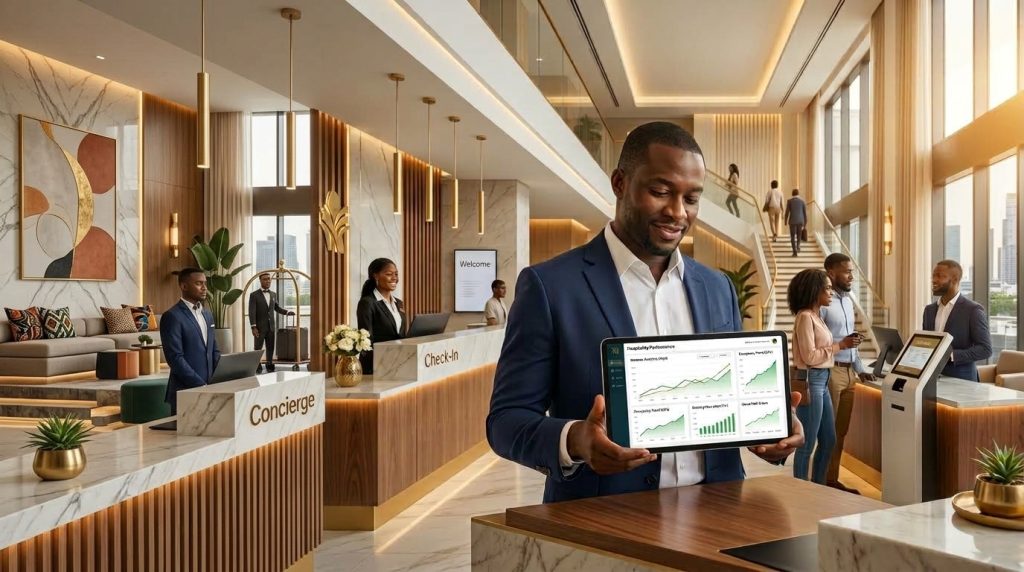
What Nigerian hospitality tech looks like in practice
This is the stretch where a connected system earns its place. When bookings, rates and reporting sync across every channel in real time, your hotel walks into Q4 already knowing where it stands instead of scrambling to find out. That’s the kind of setup eZee Absolute is built for, as part of the wider Yanolja Cloud Solution suite for hotels. If you’ve been weighing whether now is the right time to fix a disconnected setup, there isn’t a much better window.
Nigerian hospitality tech isn’t defined by one dramatic leap. It’s built one hotel, one properly connected system, and one well-trained team at a time, and that steady climb tends to pick up pace right before the busy season.
Want to walk into the last quarter with systems you can trust? Book a free demo and we’ll show you the eZee interface, how rate management, channel sync and reporting work together, and where your property can improve first.
