If you want to improve hotel profitability, start here: profit is not the same thing as a full hotel. You can have every room booked, a busy restaurant, and a front desk that never gets a quiet minute, and still end the month wondering where the money went. If that feels familiar, you’re in good company, and the cause is rarely effort. It’s usually the systems sitting behind the busyness.
Here’s the simple idea this article is built on: profit comes from two sides. Your sales systems decide how much you bring in. Your operational systems decide how much of it you keep. When either side is held together with spreadsheets, memory, and guesswork, money leaks out quietly.
Why a Busy Hotel Isn’t Always a Profitable One
The industry has noticed this too. Owners are increasingly judging a property on GOPPAR (gross operating profit per available room) rather than RevPAR, because labour, energy, and food costs have grown faster than room revenue. In plain language: a rising top line no longer guarantees a rising profit.
And the pressure is real. Labor now makes up 47% to 60% of operating expenses depending on region, and OTA acquisition costs have grown faster than RevPAR since 2019. Those two numbers alone explain why so many hotels feel stretched even when business looks good.
Here’s the part that surprised us. Cloudbeds’ 2026 report found that only 11% of European independent hotels track GOPPAR at all, meaning most are steering a profit problem using a revenue gauge. If you can’t see profit clearly, it’s very hard to improve it.
5 Practical Ways to Improve Hotel Profitability
So what actually helps you improve hotel profitability? Here are five practical ways.
1. See your revenue and your costs in one place
This is the foundation for every effort to improve hotel profitability. Manual systems make it hard to see costs and revenue in one view, while a connected property management system pulls both sides together automatically. That visibility lets a team catch a slipping margin days after it starts, not months later.
Think of it like a car dashboard. Nobody drives better by checking the fuel gauge once a month. You glance at it constantly, and small corrections are cheap. Hotels work the same way.
Simple first step: Pick three numbers you’ll check weekly, such as occupancy, total revenue, and your biggest cost line. Even a rough weekly habit beats a perfect monthly report.
2. Make selling easier across every channel
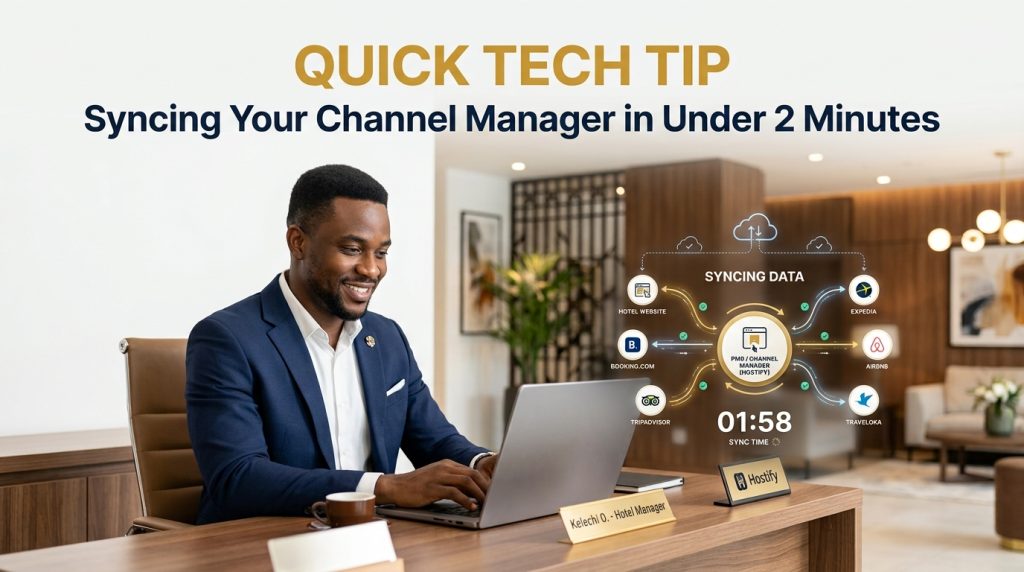
Sales systems that improve hotel profitability are about more than getting bookings. They’re about getting the right bookings at the right price without creating extra work. When your PMS, channel manager, and booking engine share the same data, a rate change made once updates everywhere, and a booking made anywhere updates your availability instantly.
That matters for profit because every double booking, missed update, or channel selling at the wrong price chips away at what you keep. It also helps you lean more on direct bookings, which don’t carry the OTA commission. Considering OTA costs have been climbing faster than room revenue, even a small shift toward direct bookings protects your margin.
Simple first step: Check how many of your bookings last month came through each channel, and what each one cost you. Most owners are surprised by the answer.
3. Let software handle the repetitive work
A big share of hotel costs is staff time spent on tasks a system could do in seconds: retyping bookings, posting restaurant charges to room folios, reconciling the day’s numbers by hand. Industry research finds that 82% of properties using integrated cloud systems report improved staff efficiency, along with a 30% reduction in operational waste.
This isn’t about replacing people. It’s about giving your team their time back for the part of the job guests actually notice, like welcoming, solving problems, and going the extra mile. Mobile check-in, keyless entry, automated messaging, and revenue management software are all reducing the labour required per occupied room, which is exactly were labour costs bite hardest.
Simple first step: Ask your front desk and finance team to list the three most repetitive things they do every day. That list is your automation shortlist.
4. Price with data, not habit
Pricing is the fastest lever a hotel has, and also one of the easiest to get wrong. AI-powered revenue management systems that optimize pricing across all channels can deliver 3% to 5% RevPAR improvements.
You don’t need to go all in on advanced tools to start. Even moving from one flat rate to a few simple rate tiers tied to occupancy (a higher rate when you’re filling up, a competitive one when you’re quiet) is a real step forward. Good sales systems then push those changes everywhere without anyone retyping them.
Simple first step: Look at the last four weeks. Were there nights you sold out early at your usual rate? That’s a night you probably priced too low.
5. Cut waste you can’t currently see
Waste hides in the places nobody’s measuring: stock that expires in the kitchen, charges that never reach a guest’s bill, supplies that disappear without a record. A connected POS and PMS closes many of those gaps automatically, because every sale and every item used is recorded the moment it happens.
And once waste becomes visible, it becomes fixable. That’s the point of better operational systems: they don’t just record what happened; they show you where money is slipping away so you can act.
Simple first step: Choose one outlet, such as the restaurant or bar, and compare what you bought against what you sold last month. The gap is your starting point.
Want to see where your hotel is losing profit? Book a free demo and we will show you your revenue and costs in one connected eZee dashboard. Book a demo →
Sales and Operations Work Together to Improve Hotel Profitability
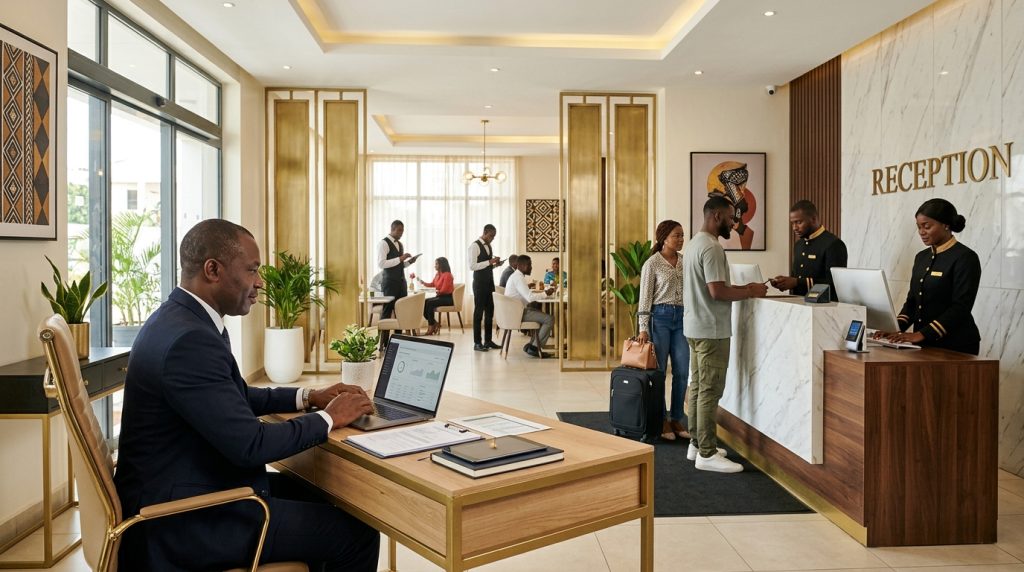
It’s tempting to fix one side and ignore the other, but they depend on each other. Great sales systems bring in guests; great operational systems make sure each guest actually leaves you with a profit. Neither does the whole job alone.
It’s also worth knowing where the industry is heading. Nearly 80% of hotel chains report using AI in some capacity, compared with just 41% of independent hotels. That gap is an opportunity for independents willing to act early, not a reason to feel behind.
How AOG Consulting Helps You Improve Hotel Profitability
At Apples of Gold Consulting, we help hotels solve this exact problem with a connected eZee suite that shares the same data, so your sales and operations stay in sync. Charges post to the right guest folio on their own, rates update across channels from one place, and reporting shows you where you stand without hours of manual work. We pair the technology with hands-on training, so your team actually uses it.
Key Numbers to Track as You Improve Hotel Profitability
You can’t improve hotel profitability without measuring it. These figures show whether your systems are actually working:
- GOPPAR (gross operating profit per available room): the clearest single measure of profit, not just revenue.
- RevPAR and ADR: show whether pricing and occupancy are moving in the right direction. See our guide to hotel dynamic pricing.
- Cost per occupied room: reveals whether housekeeping, energy and supplies are under control.
- Labour cost as a share of revenue: a key lever, since staffing is often the largest expense.
- Channel cost and direct booking share: show how much of each booking you actually keep. Growing direct bookings through your hotel website helps.
- Food cost percentage: highlights waste and pricing issues in your restaurant inventory.
With real-time hotel reporting, these numbers update daily instead of arriving weeks later in a spreadsheet, so you can act while there is still time.
Improve Hotel Profitability: FAQs
What is the fastest way to improve hotel profitability?
Start by seeing revenue and costs in one place, then fix pricing and unbilled charges. These usually deliver results within weeks. Our guide to hotel revenue leakage shows where to look first.
Do I need new software to improve hotel profitability?
Not always, but connected systems make it far easier. A cloud PMS, channel manager and POS that share data remove manual work and errors. Compare the numbers in our cloud PMS cost comparison.
How do sales and operations affect profit differently?
Sales systems bring in revenue at the right price; operational systems make sure costs stay under control. You need both to improve hotel profitability consistently.
Why is my hotel busy but not profitable?
High costs, OTA commissions, fixed pricing and waste often cancel out strong occupancy. Read more on hotel profitability and why busy hotels struggle.
Ready to improve hotel profitability with connected systems? Our team will set up eZee for your property, train your staff and support you after go-live. Book a demo →
In Conclusion
To improve hotel profitability, you don’t need a dramatic overhaul. It starts with seeing clearly, connecting your systems, and letting software take over the repetitive work. Small, steady steps in sales and operations add up faster than most owners expect, and they are the most reliable way to improve hotel profitability year after year.
Ready to Improve Hotel Profitability? Take the First Step
If you’d like to see where your hotel stands, we’re happy to help you review your current setup and find the quickest wins. Reach out to Apples of Gold Consulting to talk through how better sales and operational systems could lift your hotel’s profit.