
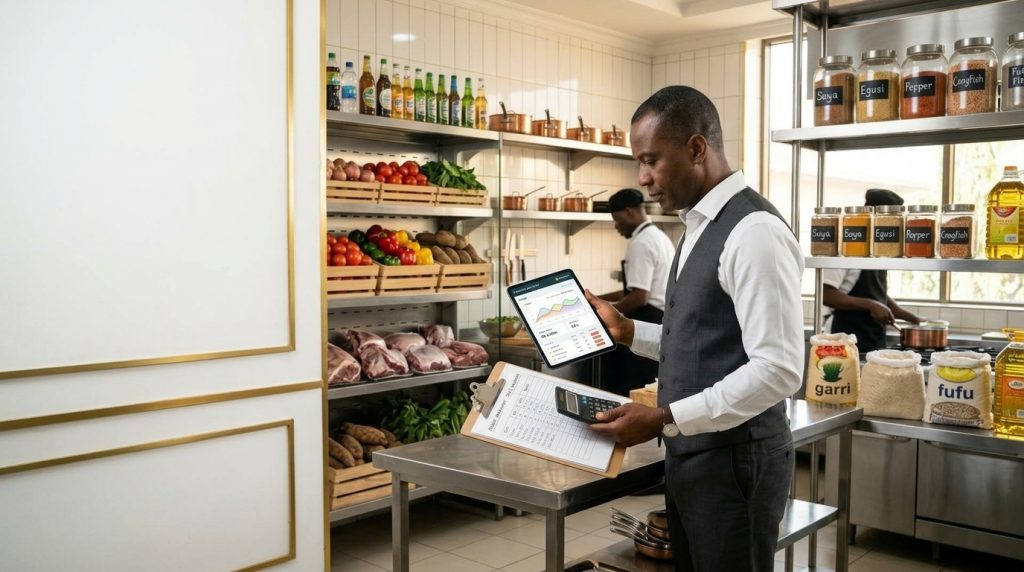
Restaurant inventory is one of those things that quietly runs a business into the ground without ever announcing itself. Nobody notices the extra bag of tomatoes that went soft in the back of the walk-in, or the tray of chicken that got over-ordered because nobody checked what was already there. It’s not one dramatic loss. It’s a slow, steady leak, and by the time it shows up on a profit and loss statement, months of it have already quietly disappeared.
So, genuinely, let me ask: how are you tracking yours right now? is a clipboard and a pen? A spreadsheet someone updates when they remember to? Or is it mostly in someone’s head, trusted to be accurate because it’s always sort of worked before?
If any of that sounds familiar, you’re far from alone. And it’s worth understanding exactly what that’s costing you.
Why this deserves more attention than it gets
U.S. restaurants generate somewhere between 22 and 33 billion pounds of food waste every year, much of it entirely preventable, such as expired ingredients, prep mistakes, portions that are just a little too generous, and inventory nobody was really watching closely. The National Restaurant Association puts the total cost of that waste at roughly $162 billion annually across the industry, with improved inventory management cited as the single biggest fix available.
The math gets personal fast. Food costs typically sit between 28% and 35% of revenue for most restaurants, which means even a small percentage lost to waste translates into real money. For a restaurant spending $25,000 a month on food, a 5% loss adds up to $15,000 in wasted money every single year money that never shows up as a dramatic red flag, just a slow erosion of margin nobody quite traces back to its source.
Five signs your current system isn’t cutting it
1. You genuinely don’t know your exact stock levels right now. If checking inventory means physically walking into the kitchen and counting, rather than glancing at a number on a screen, you’re managing reactively finding out what’s missing after it’s already a problem, not before.
2. Orders are based on habit, not actual need. If your team orders “the usual” amount each week regardless of how much was actually used, you’re very likely over-ordering some items and under-ordering others, with nobody quite sure which is which until something runs out mid-service.
3. Waste is a feeling, not a number. If you couldn’t tell someone exactly how much food was thrown out last week, or why, waste is invisible to you and invisible waste never gets fixed, because there’s nothing concrete to point at and correct.
4. Multiple people are tracking inventory their own way. A kitchen where the chef counts differently than the manager, who counts differently than whoever’s covering a shift, means your numbers are really just a collection of guesses that happen to look official on paper.
5. You find out about a shortage mid-service, not before it. If a server has ever had to tell a table “We’re out of that” because nobody caught the gap in time, your inventory system found the problem at the worst possible moment — in front of a paying guest.
What improves when you finally get a real system
FIFO — first in, first out — is the foundational principle behind proper stock rotation, ensuring older stock gets used before it spoils, rather than sitting forgotten behind a fresher delivery. Setting clear PAR levels — the minimum stock needed on hand before reordering — removes the guesswork from ordering entirely, replacing “the usual amount” with a number based on actual, tracked usage.
The results, once these practices are actually followed consistently, are substantial. Restaurants that implement inventory controls and demand forecasting report food waste reductions of 20% to 30%, and digital inventory systems specifically are tied to a 25% to 30% drop in waste compared to manual tracking. Restaurants using proper inventory software also report an 80% reduction in the time spent on physical counting– time your team gets back for actual service, instead of crouching in a walk-in with a clipboard.
How this plays out day to day
A smart solution such as eZee Optimus was built to close for hotel restaurants and F&B outlets. Its recipe-level inventory tracking ties what’s actually sold to what should have been consumed in the kitchen, surfacing discrepancies automatically instead of waiting for a stressful end-of-month count to reveal them. Paired with real-time reporting, management finally gets an answer to the question that usually only comes up after something’s already gone wrong: where is the waste actually happening, and why?
The real question worth sitting with
If you had to answer, right now, exactly how much of last week’s food purchases turned into actual revenue versus quiet waste, could you? For most restaurants still running on spreadsheets and memory, the honest answer is no. And that gap between “probably fine” and “actually tracked” is exactly where the money keeps disappearing.
Ready to actually see where it’s going?
If your restaurant inventory is still mostly guesswork, it’s costing you more than you think. Reach out to see how eZee Optimus can turn that guesswork into real numbers you can act on.