Smart operations don’t start with software; they start at a moment, usually around 2 am, when someone still adds up the day’s bills by hand while the rest of the hotel sleeps. If you’ve ever felt that, you already know why this topic matters.
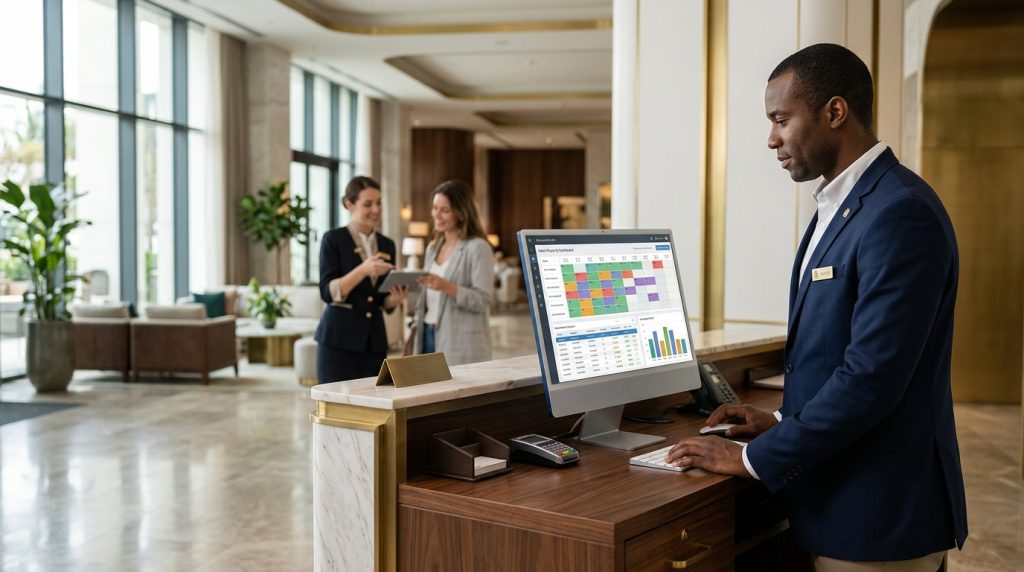
Smart operations mean letting connected systems handle the repetitive work, so your people can focus on guests and on the exceptions that need a human. It doesn’t mean replacing staff. Here are five signs your hotel is ready to make the move.
1. Your night audit eats your night
If closing the day takes hours, that’s a sign. Modern cloud-based systems can reconcile room charges, taxes, and third-party payments in real time, turning a roughly three-hour audit into a ten-minute check of exceptions. Automation doesn’t remove the need for staff oversight. Someone still reviews the exceptions. The difference is they’re reviewing a short list instead of re-adding everything.
2. Room status is always a step behind
When housekeepers have to walk to the front desk or phone in every finished room, guests wait, and rooms sit unsold. Manual status updates average a delay of 20 to 45 minutes per room, and Stay touch reports a 25% productivity gain for housekeeping teams using mobile updates. That figure comes from the provider’s own customer data, so your results may differ, but the direction makes sense.
3. Your team spends days building reports
Spreadsheets are fine until they take over someone’s week. Four in five hotels lose one to two working days every week assembling spreadsheets, and only 15% have fully automated reporting.
That’s time your manager could spend walking the floor, coaching staff, or talking to guests.
4. The same information gets typed twice
A booking entered in one place and again in another. A restaurant bill copied onto a room account. Each repeat is a chance for a mistake and a few minutes lost. In HotelTechReport’s survey, 89% of hoteliers say their PMS saves them two to ten or more hours a week.
When your PMS, POS, and other tools share data, those duplicate steps disappear.
5. One busy weekend nearly breaks you
Growing hotels feel this first. Paper reports, manual folio corrections, and scattered email chains pile up until a single guest rush can push the whole operation into gridlock. If a full house makes your team dread the weekend, your processes have probably stopped scaling with your success.
It also matters for competitiveness. Over 80% of hoteliers say technology makes them more efficient, but only 40% say it gives them a competitive edge. The hotels pulling ahead use the time they save to sell better and serve better, not just to finish earlier.
You don’t have to change everything at once. The hotels that make this shift well usually start with one or two pain points, such as the night audit or room status, and add from there.
At Apples of Gold Consulting, we help hotels do exactly that using eZee’s connected suite. The PMS brings reservations, housekeeping, billing, and reporting into one system, the POS sends restaurant charges to the guest’s bill, and the channel manager keeps rates in sync. We also train your team, because a tool only helps when people feel confident using it.
In conclusion
Moving from manual processes to smart operations isn’t about technology for its own sake. It’s about giving a growing hotel room to grow, without burning out the team that got you here. Pick the sign above that sounds most like your hotel and start there.
If you’d like help finding your quickest win, reach out to Apples of Gold Consulting. We’ll listen to how your hotel runs today and suggest practical next steps.