
A hotel manager in Abuja put it this way: “Q3 is when everything hits at once.” Conferences fill the calendar, corporate travel picks back up after the midyear slowdown, and by August, weekend leisure bookings start climbing on top of it all. Last year, her front desk faced it the same way they faced every other quarter, stuck between a PMS that didn’t sync with the channel manager and a channel manager that had never really spoken to the accounting system either.
By the time September rolled around, she’d lost two bookings to double-booking errors, spent hours reconciling numbers that never quite matched, and made two pricing decisions she later admitted were guesses. Nothing had technically broken. But the quarter had clearly gotten away from her. That’s what happens when a hotel’s busiest stretch meets its weakest systems.
Why Q3 hits differently
Q3 in Nigeria isn’t quiet. Between corporate travel resuming, conferences and events filling calendars, and the early pull of end-of-year planning, hotels see a real jump in both volume and complexity. More bookings coming from more channels, more rate changes needed in real time, more pressure on staff to get every detail right without slowing down.
A disconnected system can survive a slow month. It struggles the moment demand actually shows up, which is exactly the season a hotel can’t afford for things to go wrong.
Where the cracks show up first
- Bookings that don’t sync fast enough: When channels update separately instead of together, a room can get sold twice before anyone notices, usually right when occupancy is highest, and there’s no easy way to fix it without upsetting a guest.
- Rates that lag behind demand: In a season where demand shifts week to week, manually updating prices across multiple platforms means a hotel is often a step behind; either the hotel is experiencing under-pricing during a rush or sitting on stale rates nobody remembered to change.
- Reports that arrive too late to matter. Decisions about staffing, pricing, or marketing need to be made in the moment, not reconstructed a week later from three different spreadsheets that don’t quite agree with each other.
- Staff stretched thin by manual work: Every hour spent reconciling numbers by hand during a busy quarter is an hour not spent actually taking care of the guests who are the whole reason Q3 is busy in the first place.
Why integration matters more this year specifically
2026’s Q3 is shaping up to bring even more competition for the same guests because there are more properties online, more OTA options, and more price comparison happening before a guest ever picks up the phone. Hotels running fragmented systems aren’t just risking small errors anymore; they’re risking losing bookings to competitors who can move faster and price smarter, in real time.
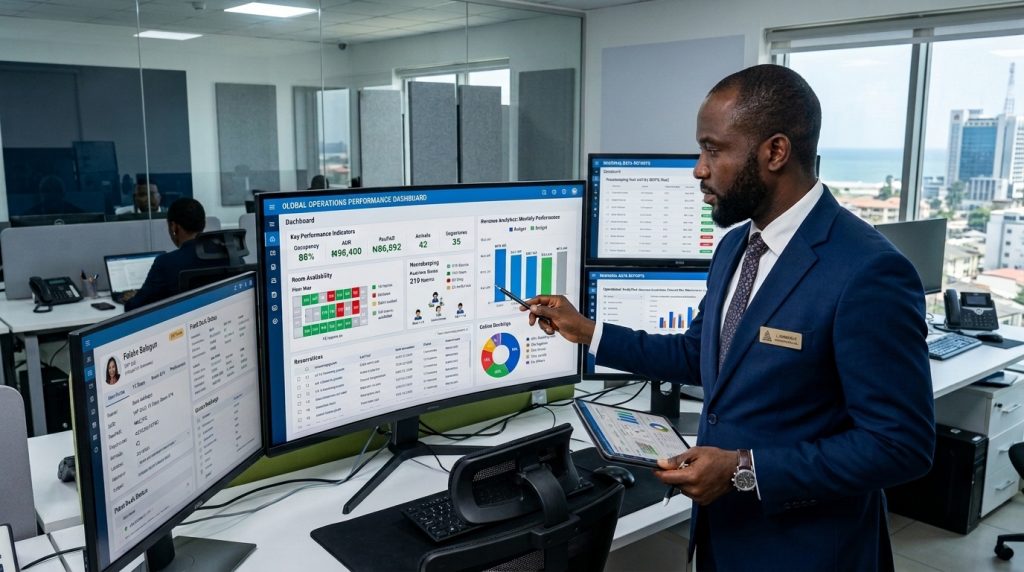
Advanced PMS integration where the property management system, channel manager, POS, and reporting all share one connected back-end helps remove the lag between what’s happening and what a hotel actually knows about it. Bookings sync instantly. Rates adjust without manual re-entry across five different platforms. Reports reflect right now, not last week.
The real advantage
It’s not about adding more software for its own sake. It’s about making sure a hotel’s busiest, most important quarter doesn’t run on guesswork, delay, and manual patchwork when the systems to fix all three already exist.
The hotels that come out of Q3 2026 strongest won’t necessarily be the ones that worked hardest. They’ll be the ones whose systems worked with them, instead of against them.
Don’t let Q3 catch your systems off guard. Get an integrated PMS that can help you handle the busiest quarter with ease. Reach out now to see what an integrated PMS can do for you.