
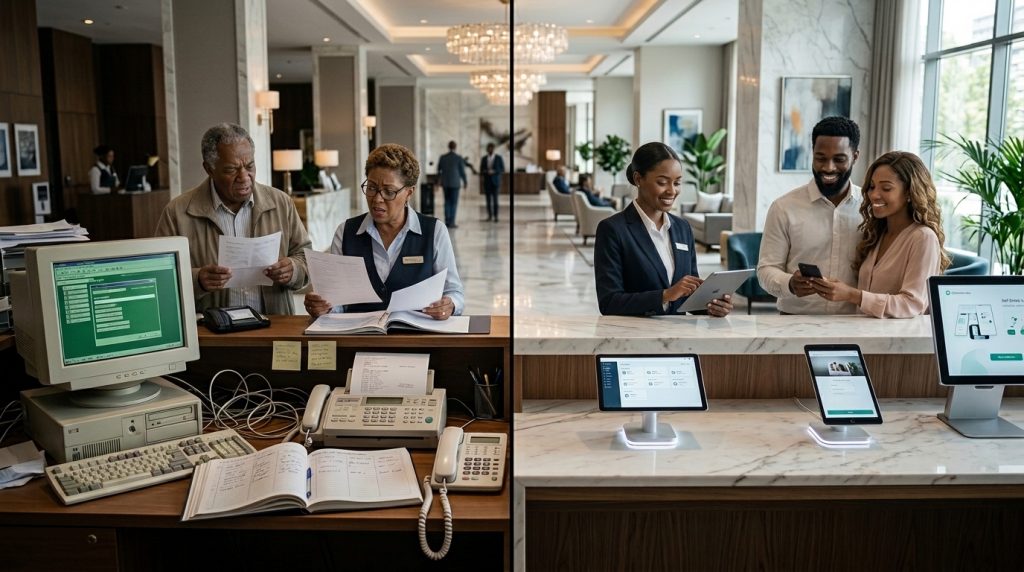
Walk into many Nigerian hotels, and you’ll still find a strange mix: a computer system sitting quietly on the desk while the front office staff reaches for a handwritten logbook instead. A manager who keeps putting off new software because “what we’re using still works.” A team that reverts to their old paper habits three weeks after a new system was introduced, simply because it feels easier.
Nothing looks broken from the outside. Guests are checking in; rooms are filling up. But underneath, small inefficiencies are quietly piling up, the kind that don’t show up until months later, in a revenue report that doesn’t quite add up, or a guest complaint about a booking that went wrong.
Most hotels aren’t refusing technology on purpose. It’s more subtle than that; it’s hesitation. It’s the comfort of a system everyone already knows how to use, even if that system is quietly holding the business back.
A lot of owners run their hotels the way they always have, and when business seems fine, there’s rarely any real pressure to change. Others know they need a better system but aren’t sure where to start, what to choose, or how to switch without disrupting the day-to-day. And for some, the hesitation comes from experience: a system was introduced once before, but it was never set up properly. Staff wasn’t trained. There was no real support. So instead of making life easier, it created new problems, and the lesson learned was “technology is complicated,” when really, the setup was the issue.
What that resistance actually costs
Without a proper system holding things together, hotels tend to run into the same handful of problems like records that don’t quite match up, no clear view of bookings and revenue in real time, and decisions that get made too late to matter.
A payment might not match a reservation, and nobody notices right away. Room rates get set on a gut feeling instead of what demand actually looks like. Reports only show up at the end of the day, sometimes the end of the month by which point the opportunity to act on them is already gone.
Compare that to hotels running properly connected systems. They can see what’s happening in real time, adjust pricing as demand shifts, and catch problems the moment they happen instead of weeks later. The difference isn’t that these hotels work harder. It’s that they can actually see what’s going on and clarity changes everything.
Why Good Software Still Gets Abandoned
Breaking out of this cycle isn’t really about buying new software. It’s about how that software gets introduced. A system dropped in without proper setup feels overwhelming. Staff who aren’t trained lose confidence fast and stop trying. And without ongoing support, even a good system quietly falls out of use because everyone drifts back to what’s familiar. After all, familiar feels safer than confused.
What it looks like when it’s done right
Picture a hotel where bookings, payments, and reports all live in one place. Where staff use the system confidently instead of second-guessing every entry. Where decisions such as pricing, staffing, and marketing are based on what’s actually happening, not a guess.
That’s when technology stops feeling like a burden and starts working quietly in the background, the way it’s supposed to.
This is exactly what solutions a good software takes care of, such as handling reservations, billing, housekeeping, and reporting from anywhere, without the stress of complicated installations or IT headaches. Everything stays connected and updates in real time. On the food and beverage side, a good POS captures every transaction as it happens, so nothing slips through unrecorded. And for hotels selling rooms across multiple platforms, a channel manager helps to keep rates and availability in sync automatically, cutting out the manual work and the costly mistakes that come with it.
But the technology alone isn’t what makes the difference. It’s the support around it, the guidance through setup, the training that gets staff genuinely comfortable using the tools that decides whether a system actually gets used, or quietly abandoned a few weeks in.
The real question
The gap isn’t demand. Nigerian hospitality has plenty of that. The gap is having the right systems in place to support the growth that’s already trying to happen.
The tools for smarter, simpler, more connected hotel operations already exist. The only real question left is how much longer any given hotel is willing to wait before using them.
Don’t wait for the cost of resistance to catch up with you. See how good software can bring your hotel into that future. Book a demo today.