
Poor hotel inventory management is one of the quietest drains on hotel profit. Have you ever wondered, as a hotelier or hotel manager, why the figures in your inventory never add up? Most times you ignore it, feeling it is nothing to worry about, but it’s costing you every single day. Here is a scenario most hotel owners know but rarely say out loud.
You order supplies. The delivery arrives. Stock is recorded. But three weeks later, when your store manager runs the numbers, something does not add up. Toiletries are short. Linen counts are off. The kitchen is asking for items that were supposedly restocked last week. And nobody, not the storekeeper, not the receiving officer, not the department heads, seems to know exactly where things went.
This is not bad luck. This is a hotel inventory management failure. And it is happening in hotels across Nigeria every single day.
5 Reasons Stock Goes Missing in Hotel Stores
Most hotel owners blame theft first. And yes, pilferage is real. But the truth is, the majority of inventory losses in hotel store operations are not caused by stealing but by poor systems, weak processes and a culture of assumption. This is what is actually happening behind the scenes:
- No one is counting properly. Stock is received without thorough verification against the purchase order. A supplier delivers 48 units; the receiving officer signs for 50 because counting every item feels unnecessary. That two-unit gap, multiplied across dozens of deliveries every month, becomes a significant loss by year-end.
- Issues are not tracked in real time. Items leave the store based on verbal requests or handwritten notes that never make it into any formal record. By the time a proper stock count is done, the paper trail has gone cold, and nobody can account for the movement.
- Multiple people have store access. When everyone has a key, no one is responsible. Accountability disappears the moment a storeroom becomes a communal space where any staff member can walk in and “just grab a few things.”
- Spoilage and expiry are not monitored. Food items, cleaning chemicals and perishables expire quietly on shelves because nobody is rotating stock or flagging items approaching their expiry date. The loss is written off silently, absorbed into the overall “shortage” figure.
- There is no regular reconciliation. Physical stock counts happen once a month, if at all. By the time discrepancies are discovered, it is too late to trace what happened, when, or who was responsible.
Every one of these gaps is a form of revenue leakage, and every one of them is a hotel inventory management problem, not a people problem.
Recognise any of these in your storeroom? Let us show you how hotel inventory management with eZee tracks every item from delivery to issue, in real time. Book a live demo →
The Culture Problem Nobody Addresses
Beyond the systems, there is a human truth that makes this problem worse: in many hotels, small losses are considered normal. We hear excuses like “It’s just the way things are,” “Every hotel loses stock” and “We’ve always had shortages.”
When an organisation accepts loss as inevitable, it stops fighting it. Staff who might otherwise raise concerns stay silent because nobody seems to care. A culture of low accountability quietly bleeds a hotel’s profitability month after month, year after year.
This is the real dirty secret: not that theft happens, but that most hotels have quietly decided to tolerate losses they could actually prevent.
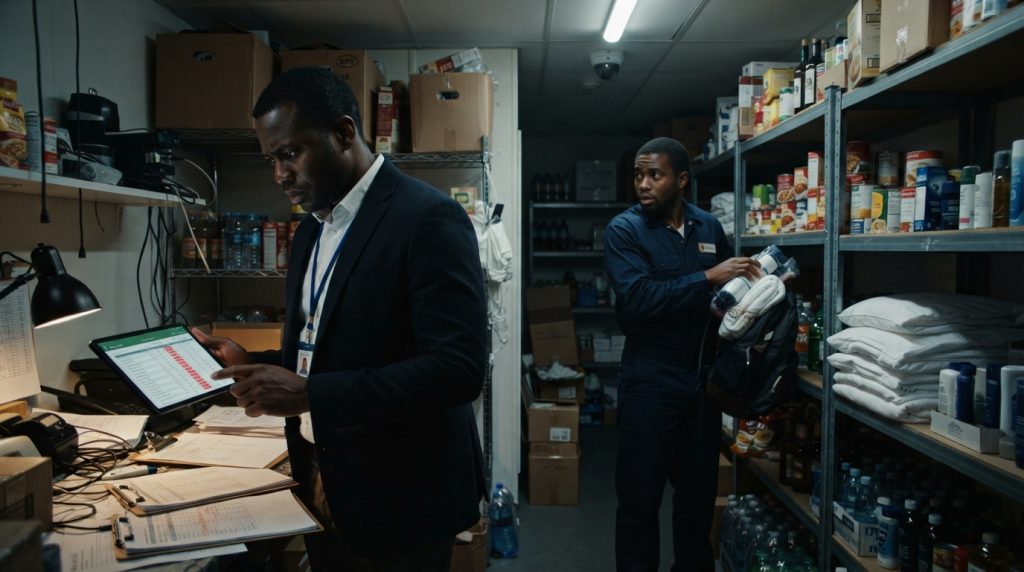
What Better Hotel Inventory Management Actually Looks Like
Good hotel inventory management is not complicated. It requires discipline, the right tools and a leadership team that treats the storeroom as seriously as it treats the front desk.
eZee’s real strength isn’t any single tool; it’s how they all work together to close the gaps where inventory quietly disappears. Usage gets tracked in real time, every item issued is logged and traceable, kitchen consumption gets matched against actual sales, and procurement is guided by accurate demand and booking forecasts instead of guesswork. The result is a hotel operation where nothing moves without visibility, and stock loss simply has nowhere left to hide. It also feeds straight into accurate hotel reporting.
5 Steps to Tighter Stock Control
Alongside the right system, these basic inventory control habits make a big difference:
- Implement a proper stock management system. Replace paper registers and spreadsheets with hotel management software that records every receipt and issue.
- Restrict and log store access. Only authorised personnel should enter the storeroom, and every visit should be logged.
- Enforce a proper receiving process. Count and check every delivery against the purchase order before anyone signs.
- Conduct weekly spot checks, not just monthly counts. Small, frequent checks catch problems while they’re still traceable.
- Create a culture of ownership. Make your storekeeper proud of their role, and give them the tools and authority to protect the stock.
Want to see these controls working together? We’ll walk you through eZee’s hotel inventory management tools in a live demo, built around your hotel. Book a live demo →
In Conclusion
Your storeroom is not just a room full of supplies; it is a financial asset. Every item on those shelves represents money your hotel has already spent. Losing it without explanation is a direct hit to your profitability.
The dirty secret about inventory loss is that most of it is entirely preventable. The only question is whether your hotel is ready to stop accepting it. Losses don’t have to be part of running a hotel. With proper hotel inventory management in place, you can track every item, reduce waste and take the guesswork out of stock control.
If you’re ready to see how it works, book a live eZee demo with Apples of Gold Consulting. It could be the first step toward tighter controls, better accountability and a more profitable hotel.